Overview
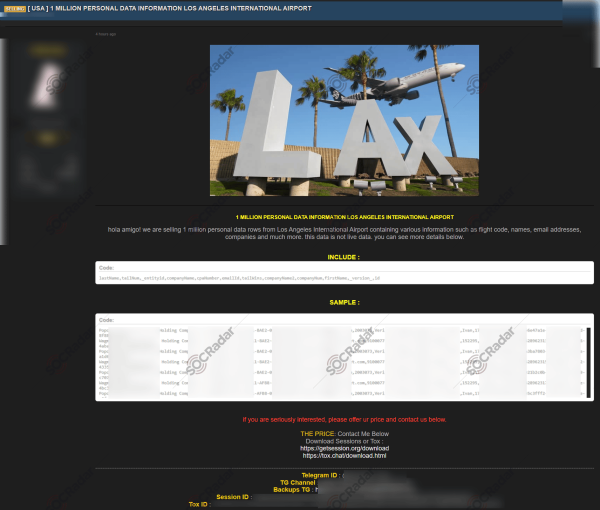
On July 31st 2025, a threat actor on a dark web forum claimed to be selling a database allegedly sourced from Los Angeles International Airport (LAX). The database reportedly contains 1 million rows of personal and flight-related information, including names, email addresses, flight codes, and company affiliations. While the authenticity of the data remains unverified, its scope and nature raise substantial concern for aviation cybersecurity, data protection, and third-party vendor exposure.
This case reflects ongoing threat actor interest in aviation-sector data and reinforces the need for enhanced vigilance, especially in highly trafficked airport environments like LAX.
What Happened?
Cyber threat intelligence sources detected a dark web listing advertising the sale of a database allegedly originating from systems associated with Los Angeles International Airport (LAX). The seller claims the dataset includes:
- Passenger names and email addresses
- Associated company names and affiliations
- Historical flight codes
- Potential internal identifiers or operational metadata
While the actor did not specify the breach method, the structure of the data and reference to corporate affiliations suggest a third-party source or auxiliary system may have been compromised, rather than LAX’s core infrastructure. Additionally, the actor described the data as “not live,” implying that the information may be historical or outdated, though still viable for use in phishing, impersonation, or supply chain exploitation.
The presence of corporate metadata linked to passengers or employees increases the risk of targeted business email compromise (BEC) or credential harvesting, particularly if users reused passwords or shared login environments.
Why This Matters for Aviation
Airport infrastructure is a strategic asset – not only in physical terms, but as a hub of interconnected systems and stakeholder data. A breach that affects passenger, staff, or vendor information can serve as a gateway for broader compromise, especially when personal and operational data are combined.
Even if the leaked LAX database is historical, threat actors may still exploit its contents to launch targeted social engineering attacks, potentially affecting airline personnel, travel partners, or connected systems. As such, this incident reinforces that data protection is flight safety, especially in a highly digital, globally connected aviation ecosystem.
Recommended Actions
Verify the Authenticity and Exposure
- Work with cyber intelligence partners to determine if any records in the LAX-associated database match internal employees, passengers, or business partners.
Enforce Password Resets and MFA
- Immediately initiate password resets for any accounts possibly linked to the leak. Ensure multi-factor authentication (MFA) is applied across all high-privilege and remote-access systems.
Enhance Monitoring for Related Threats
- Deploy or strengthen monitoring to detect suspicious access, such as credential stuffing, unusual login locations, or phishing emails referencing travel data.
Conduct Security Awareness Training
- Brief employees and third-party vendors on the breach. Focus on phishing recognition, domain impersonation, and data leak response protocols.
Perform Third-Party Risk Assessments
- Reevaluate cybersecurity policies and breach notification procedures among all vendors with access to passenger or flight data.
In Summary
The alleged sale of a 1 million-row database associated with Los Angeles International Airport (LAX) represents another high-profile threat to aviation data integrity. Whether originating from a direct breach or third-party compromise, the exposure of names, flight codes, and corporate affiliations elevates the risk of phishing, impersonation, and aviation-specific social engineering campaigns.This incident highlights the critical need for robust threat monitoring, third-party oversight, and proactive response protocols under frameworks such as EASA Part-IS. With aviation increasingly in the crosshairs of cybercriminals and hacktivists alike, protecting data is a non-negotiable pillar of aviation safety.